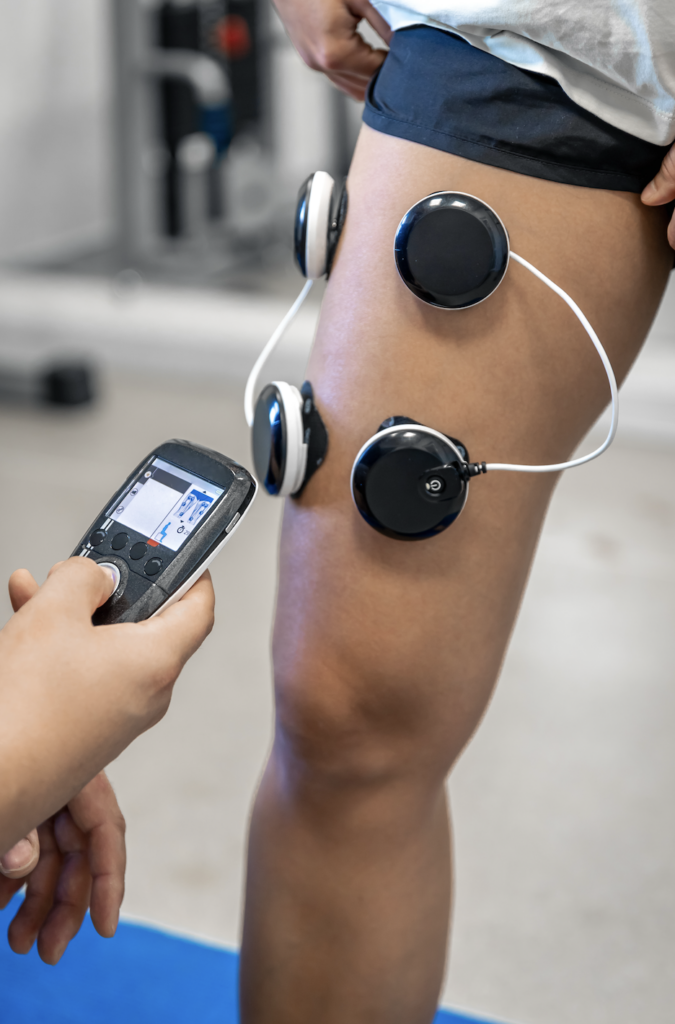
Electrical muscle stimulation (EMS) is a technique that induces muscle contraction through the use of electrical impulses. A device generates the impulses of the stimulator, which are transmitted via electrodes placed directly on the skin over the targeted muscle. These impulses create shocks that lead to muscle contraction similar to that normally generated by the central nervous system.
Its use has various applications:
- In sports, as a complementary method for physical preparation to increase strength, as a recovery tool, and as a preventive technique.
- In rehabilitation for muscle atrophy and strengthening.
- In aesthetics, for toning muscles.
Depending on the goal and the muscles involved, specific combinations of frequencies are used:
- Between 2 Hz and 4 Hz, a relaxing effect is achieved on the muscle group being targeted.
- Between 4 Hz and 8 Hz, there is a significant increase in endorphin production, an elevation of pain threshold, improvement in local blood circulation and tissue oxygenation, and a reduction in toxic metabolites.
- Between 8 Hz and 18 Hz, there is a great increase in local circulation and a massaging effect.
- Between 18 Hz and 40 Hz, the type of stimulation corresponds to the muscular work of continuous medium-intensity running.
- Between 40 Hz and 60 Hz, there is an increase in the workload and muscle resistance.
- Between 60 Hz and 80 Hz, strength and muscle tone are enhanced.
- Between 80 Hz and 120 Hz, maximum strength and speed parameters can be improved.
There are no known significant side effects from electrical stimulation, but its use is contraindicated for people with pacemakers, heart conditions, epilepsy, pregnant women, those with active phlebitis, fever, thrombophlebitis, or serious illnesses.